Grade 9 · CAPS TechnologyLaser-cut in Gauteng
Hydraulic Arm School Project Kit – Grade 9
R 300.00
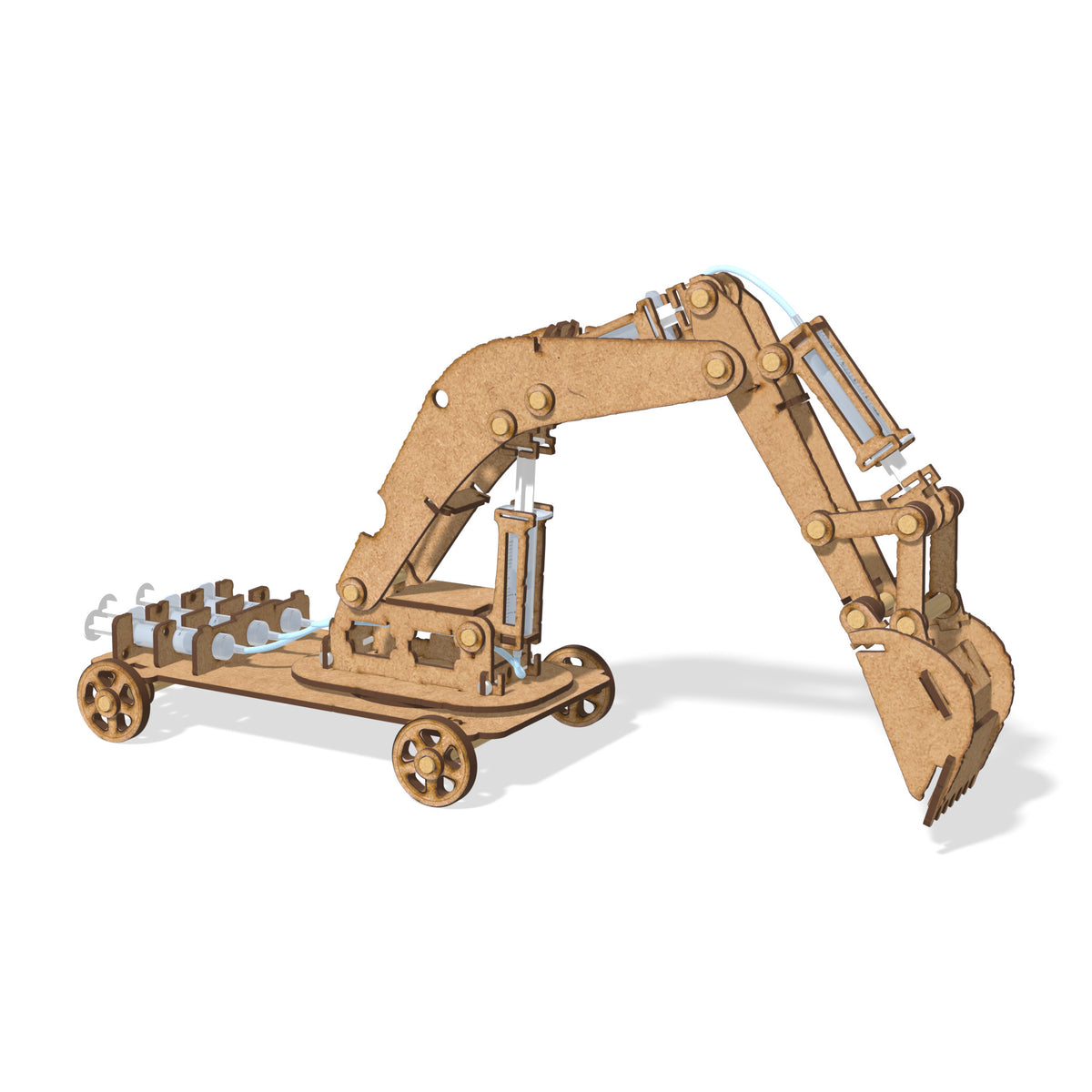
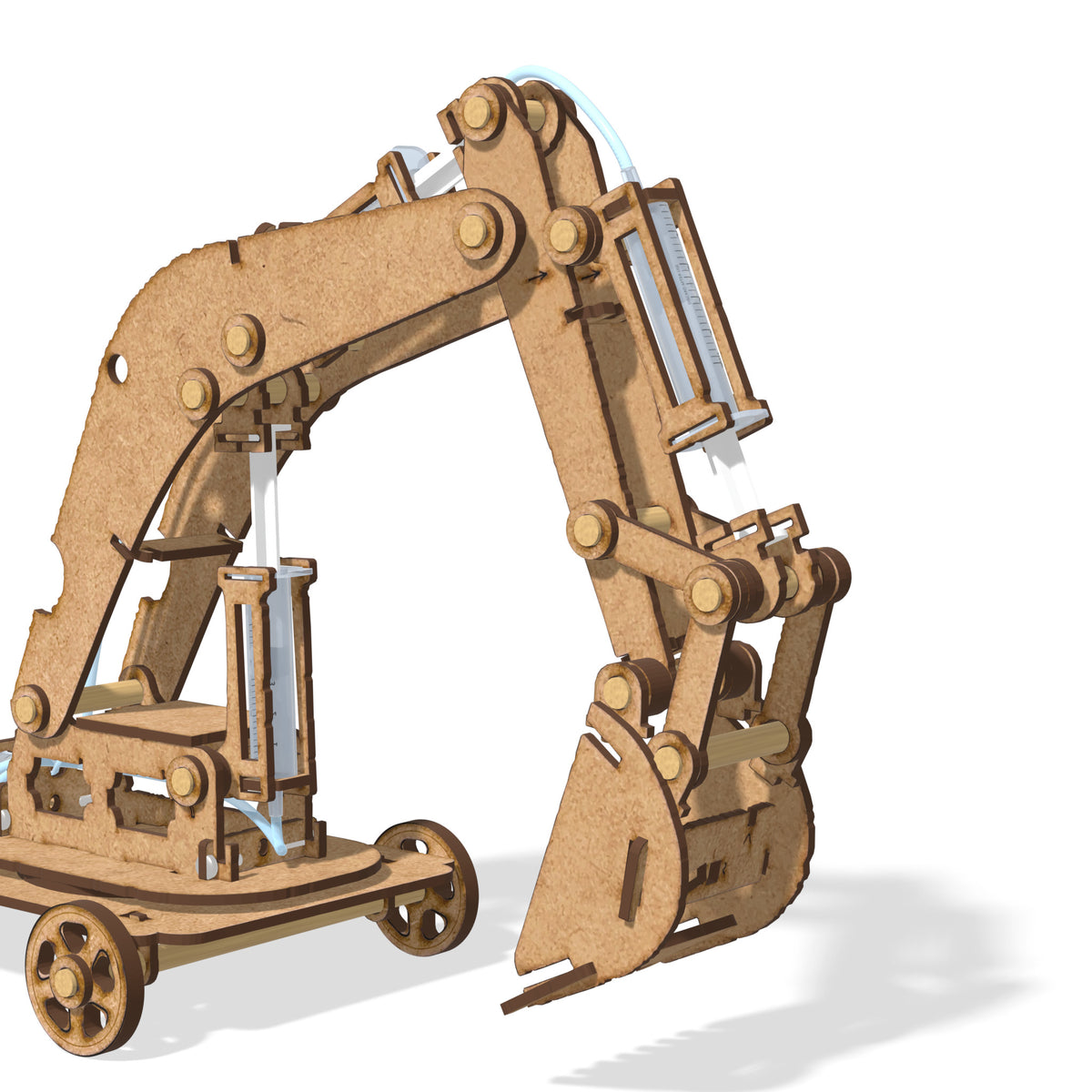
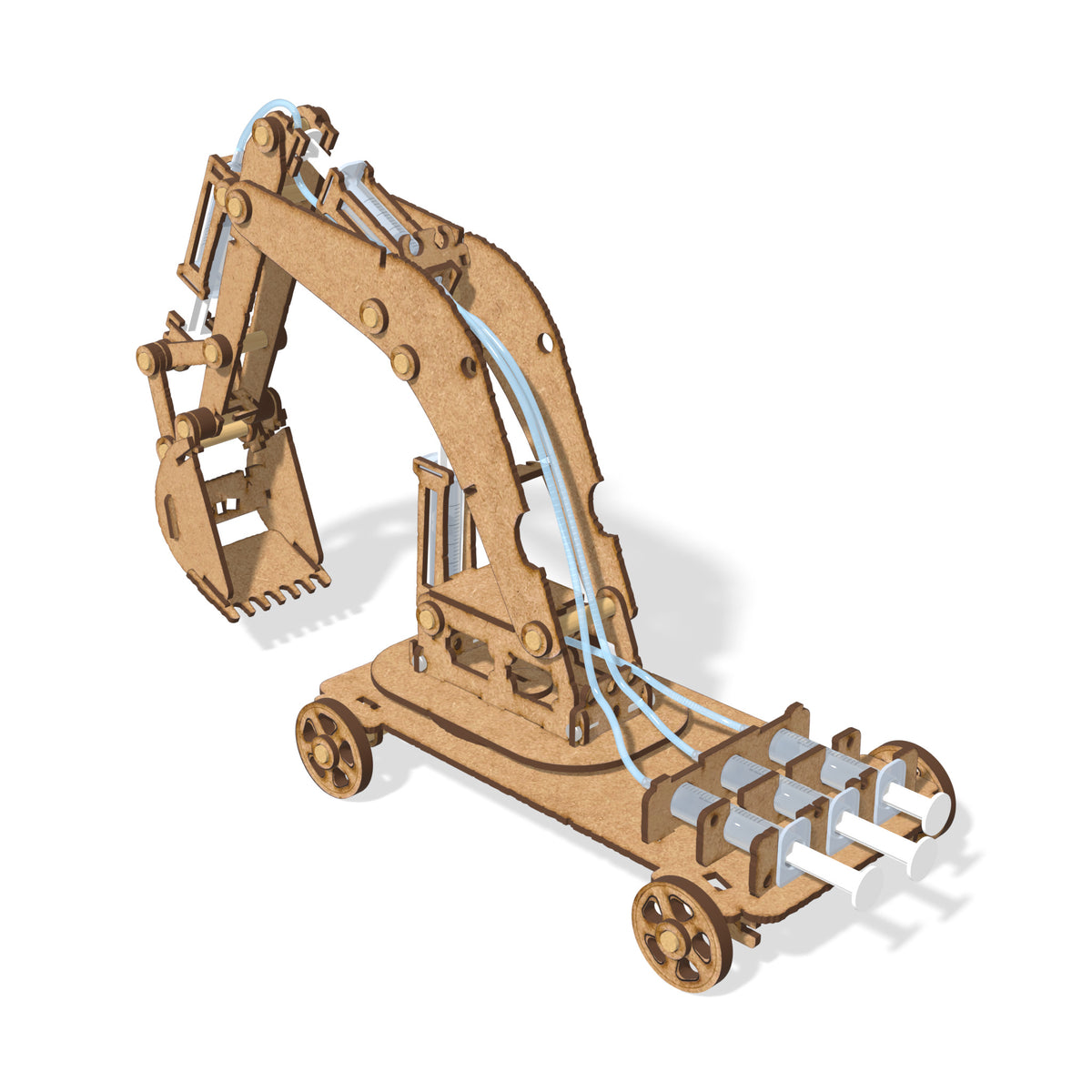
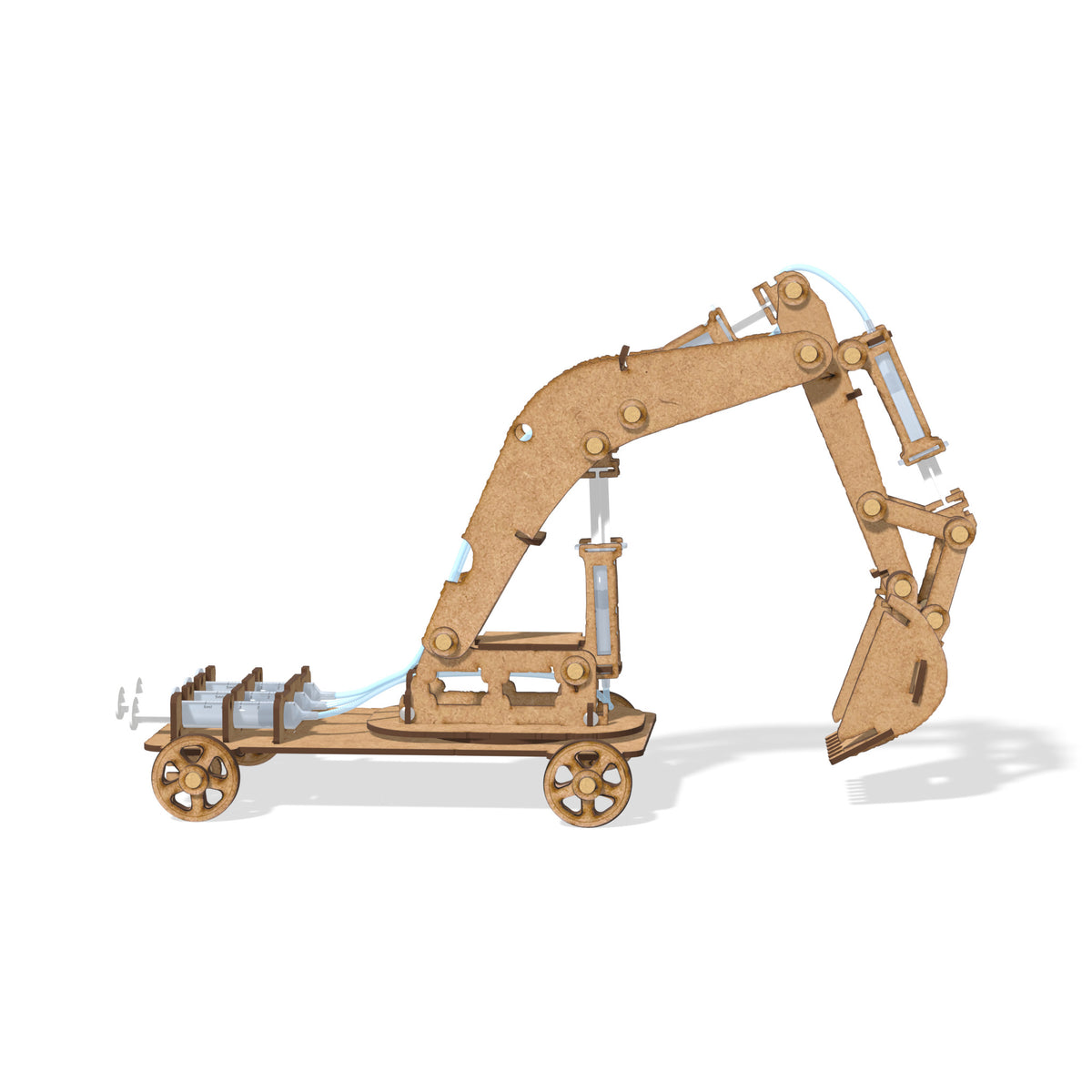
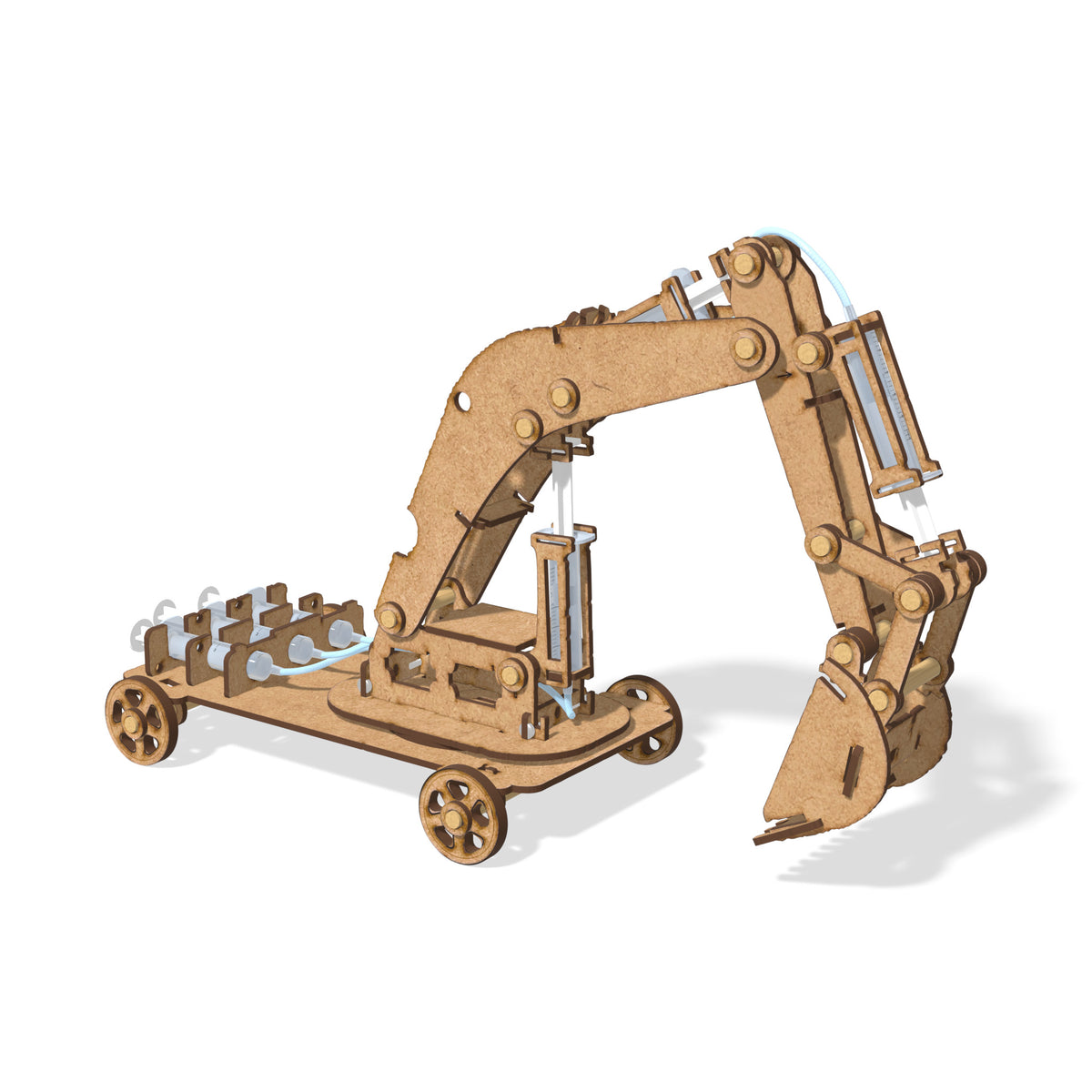
A laser-cut wooden kit for the Grade 9 hydraulic system school project: a working excavator arm driven by water in syringes. Push a syringe on the chassis and the arm on the other end of the tube moves. No batteries and no motors — the only thing making it move is the liquid.
What's in the kit
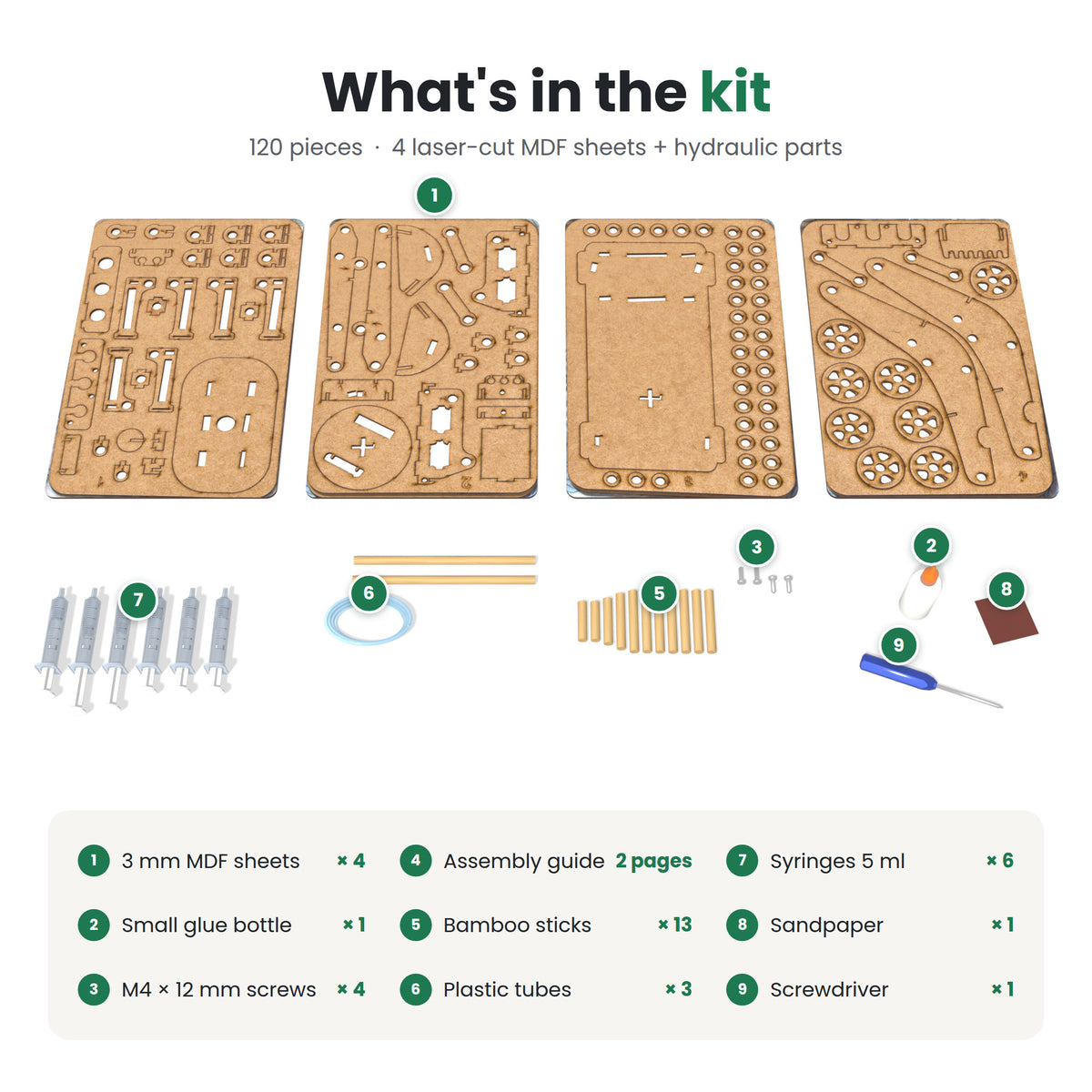
120 pieces, packed flat:
- 3 mm MDF sheets × 4, laser-cut, with every part labelled
- Syringes, 5 ml × 6
- Plastic tubes × 3
- Bamboo sticks × 13
- M4 × 12 mm screws × 4 · screwdriver × 1
- Small glue bottle × 1 · sandpaper × 1
- Assembly guide, 2 pages
Water for the syringes is not included — tap water is what the model runs on.
How the hydraulics work
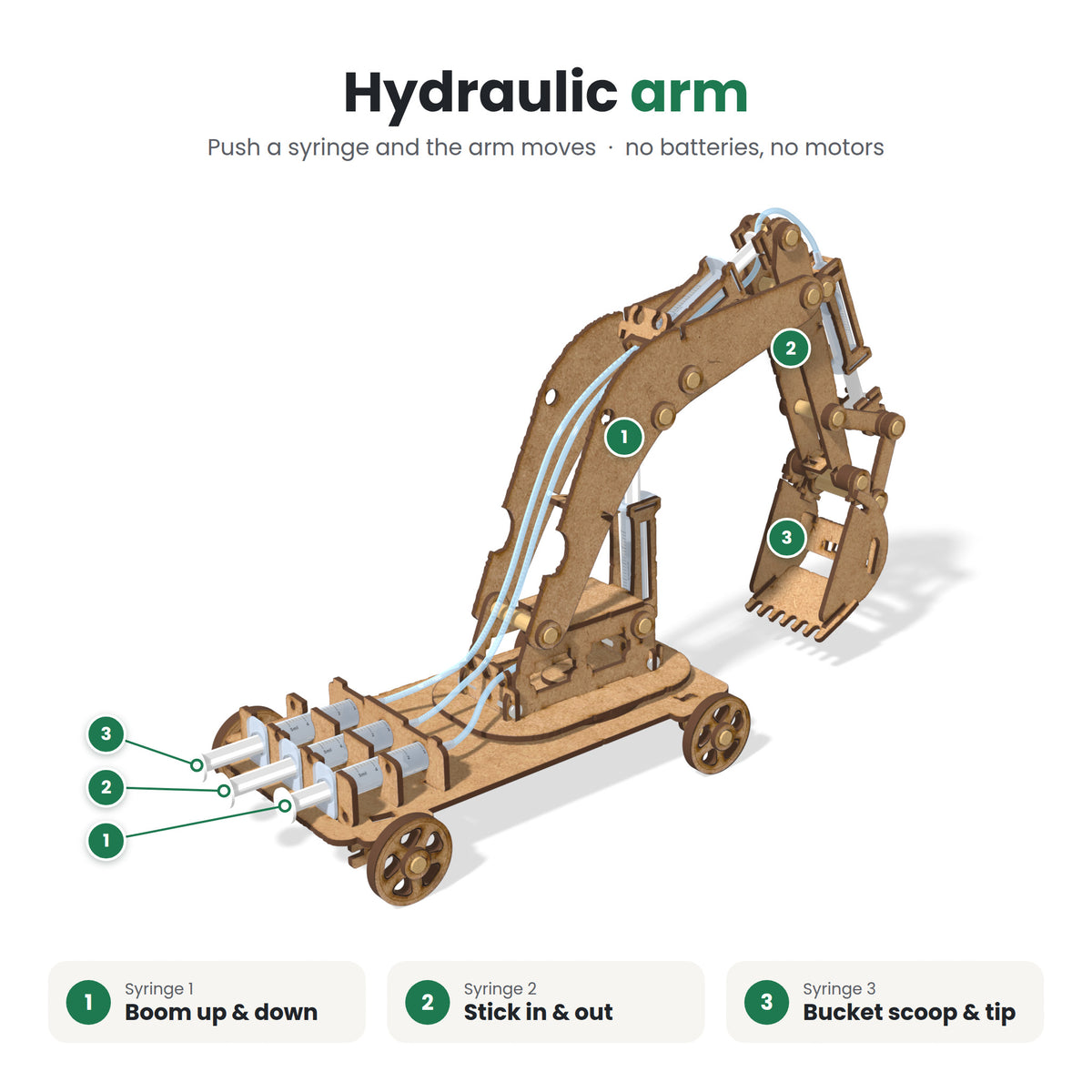
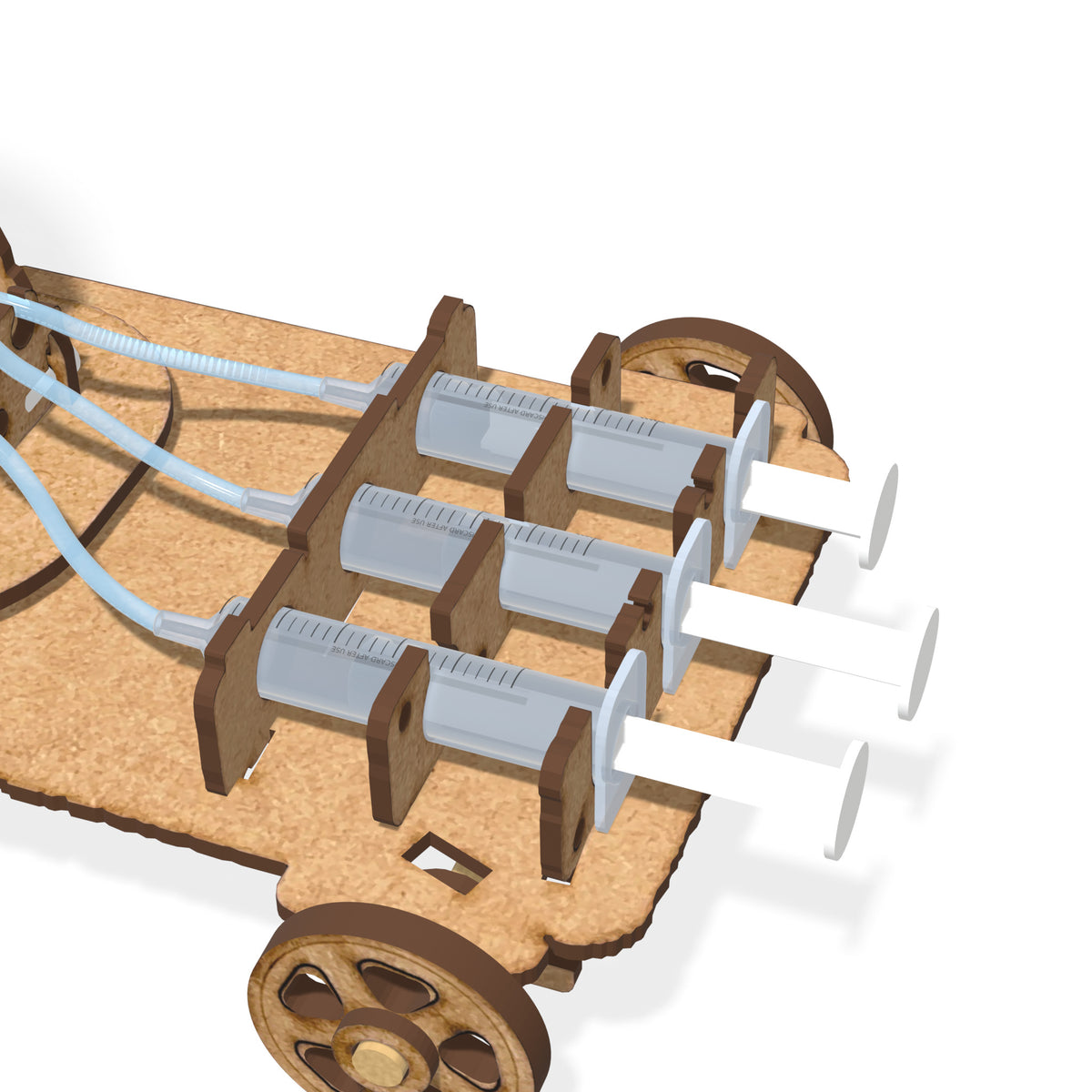
The six syringes make three pairs. Each pair is joined by one of the three tubes: one syringe sits on the arm as the cylinder, the other sits on the chassis as the control. Fill the pair with water, push the control in, and the water has nowhere to go but down the tube and into the other syringe, which pushes its plunger out and moves the joint. Pull the control back and the joint returns.
That is the whole principle a Grade 9 report has to explain: a liquid does not squash, so force put in at one end comes out at the other. It is the same idea as the brakes on a car and the arm on a real excavator — this model just uses water and 5 ml syringes instead of oil and steel rams.
Three controls, three joints
- Syringe 1 — boom up and down. The big lower arm that lifts the whole front end.
- Syringe 2 — stick in and out. The second arm, which reaches the bucket forward and back.
- Syringe 3 — bucket scoop and tip. Curls the bucket to pick a load up and tips it out again.
All three work at once, so the arm can be driven like the real machine: boom down, bucket in, boom up, swing over, bucket out.
Building it
Thirteen build steps, and a two-page assembly guide goes in the box. The parts are labelled in the order they are used, the bamboo sticks make the pivots the joints turn on, and the four M4 screws and the screwdriver are for the joints that carry the most load.
Size when built
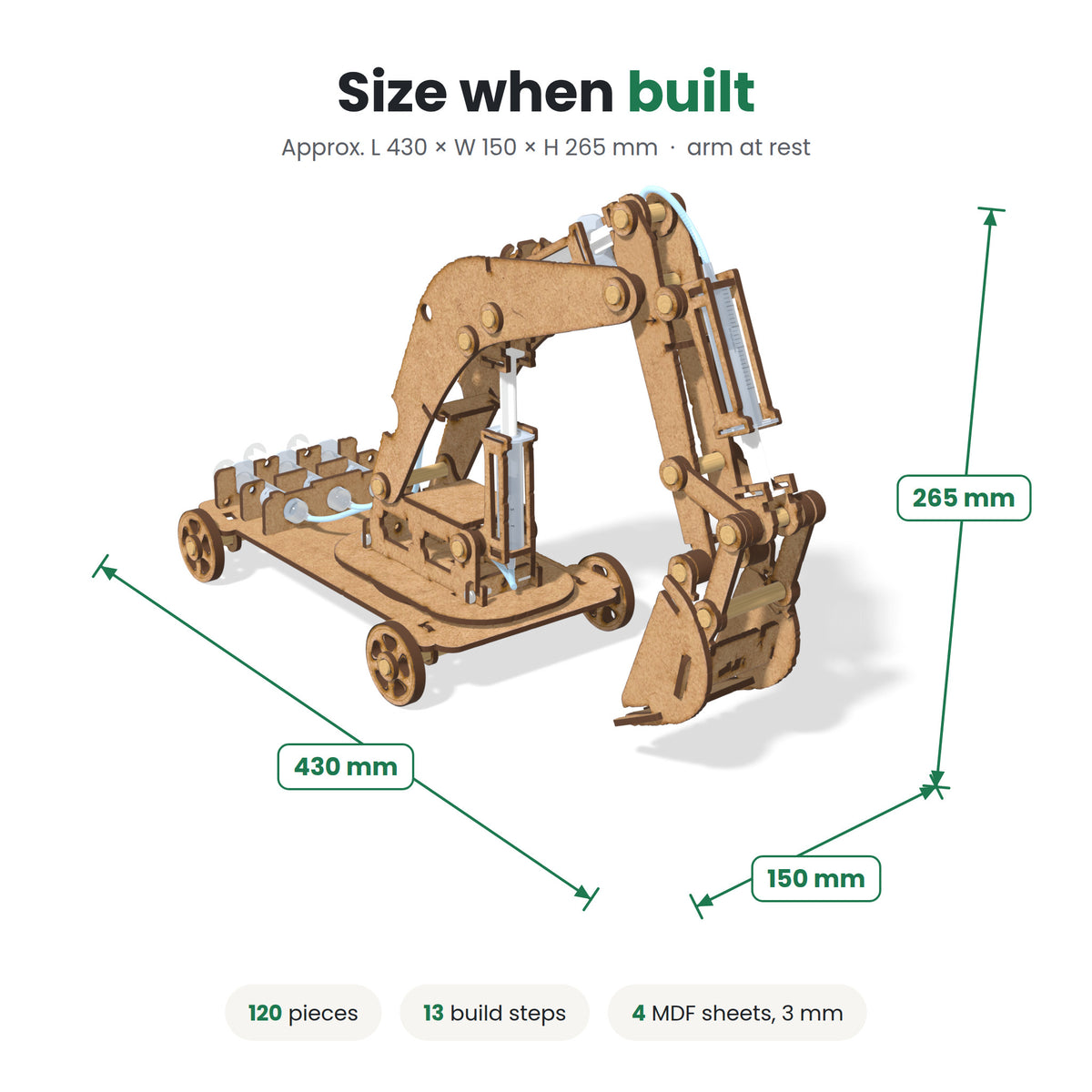
Approximately 430 mm long, 150 mm wide and 265 mm tall with the arm at rest — it takes up about as much desk space as a laptop, and the arm reaches higher than that when it is raised.
Materials
Every wooden part is cut by laser from 3 mm MDF, so tabs and slots meet within a fraction of a millimetre. A sheet of sandpaper is in the box for the few edges a learner may want to soften, and a small bottle of glue for the joints that are glued rather than pinned.
Test-fitted before it's packed
We build every kit once by hand before it is packed. If a part doesn't fit, that's on us, not on your learner.
Built for the CAPS Technology syllabus
Drawn in our own workshop and checked against the CAPS Technology syllabus for Grade 9, where hydraulic and pneumatic systems sit under Mechanical Systems and Control. See all Grade 9 Technology projects.
Delivery
Packed in one flat box in Gauteng and shipped to homes, schools and shops across South Africa and Namibia. WhatsApp us with your town for delivery options, or ask about class sets and wholesale.
- 01 Drawn
- 02 Cut
- 03 Test-fitted
- 04 Filmed
- 05 Packed
Other kitsProjects & puzzles
Build one this term.
Get a kit