

School project kitLaser-cut in Gauteng
Human Skeleton Model Kit for School Projects
R 220.00
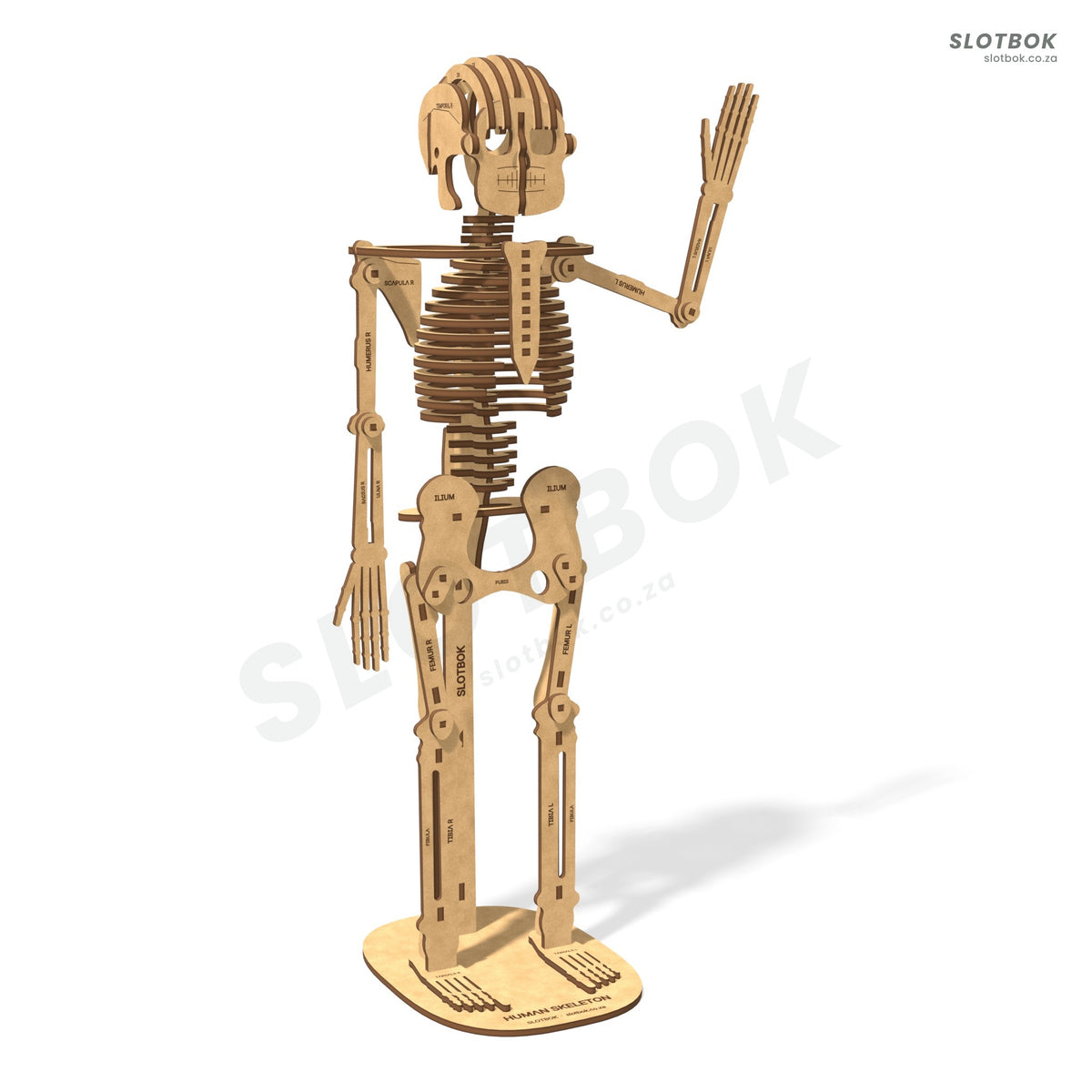
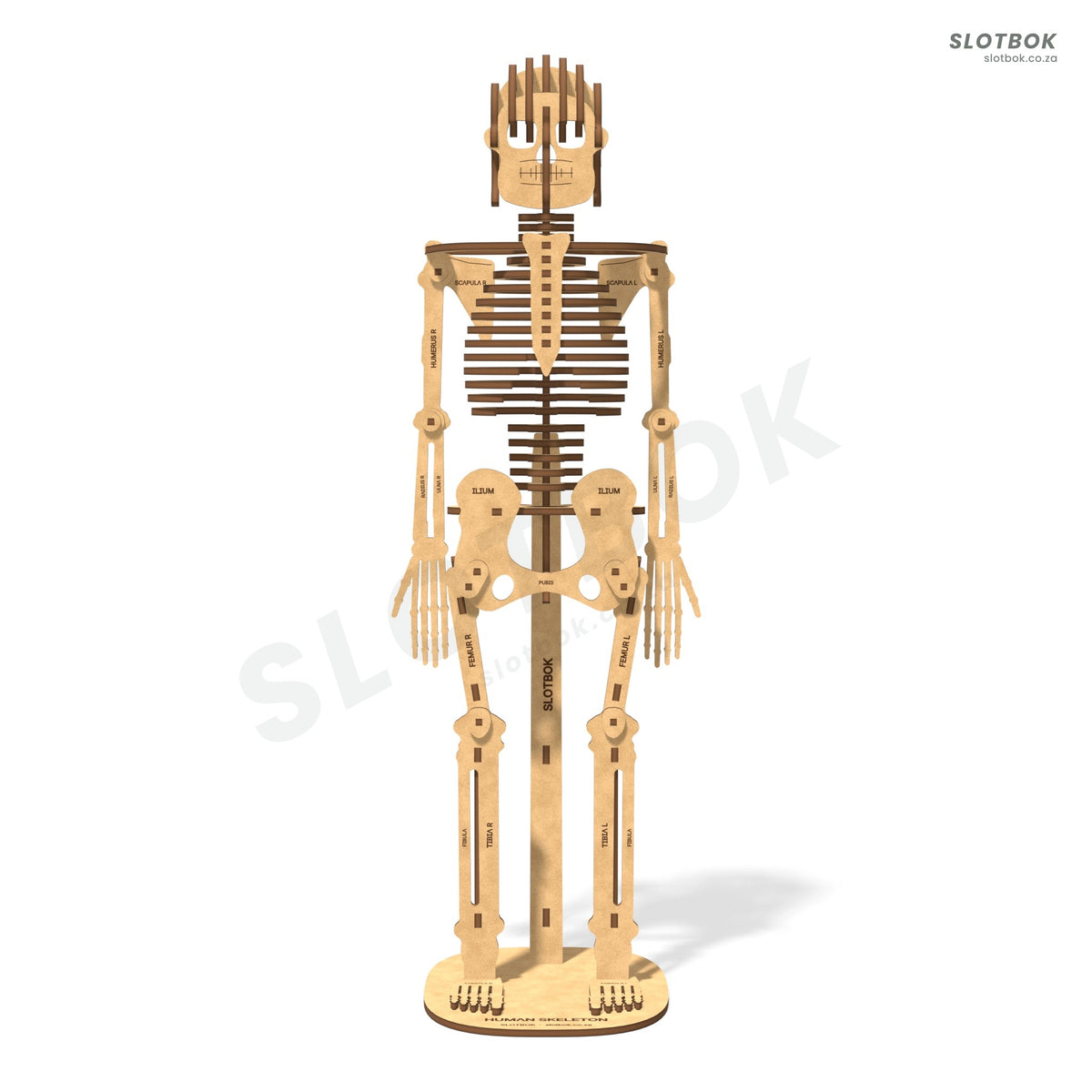
A laser-cut wooden human skeleton model for the skeleton school project: flat 3 mm MDF parts that slot together into a 3D skeleton model, so the time goes into learning the bones and explaining what they do, not into cutting cardboard.
A 3D skeleton model for school projects
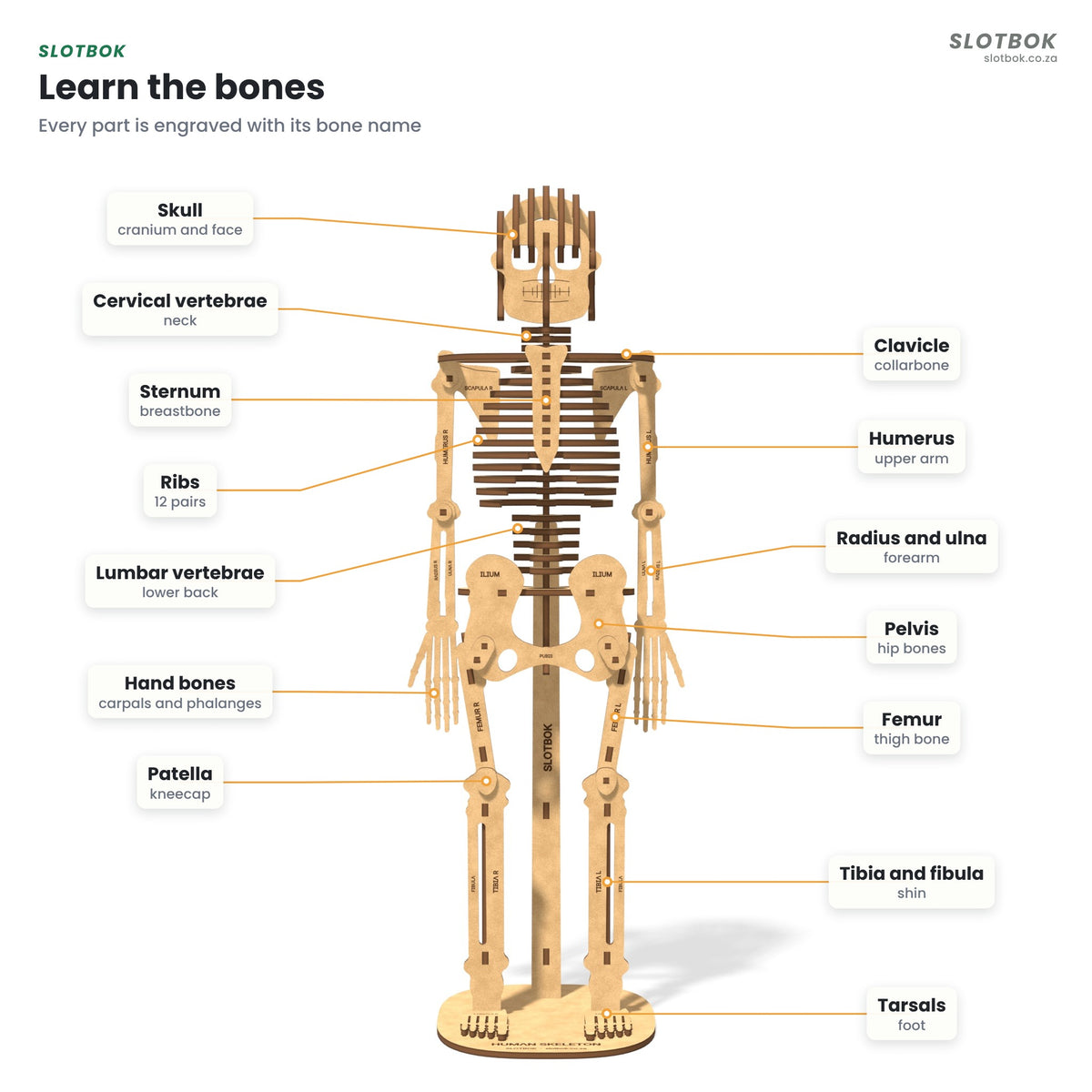
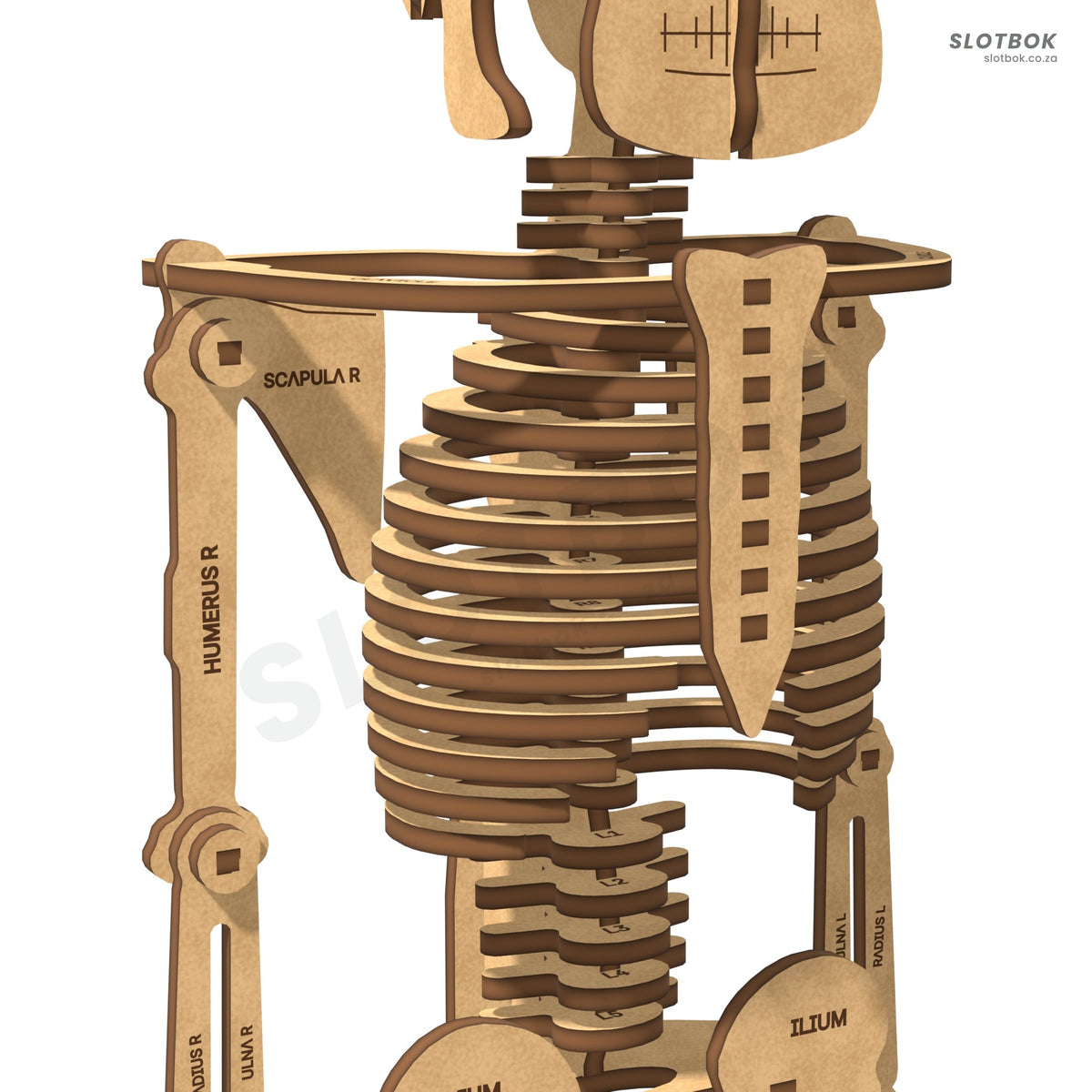
Most skeleton school projects ask a learner to make a model and name the main bones: the skull, the spine, the rib cage, the pelvis, and the bones of the arms and legs. A slot-together kit gets the shape right from the start, and leaves the labels, the drawings and the write-up as the learner's own work.
What the skeleton does
The skeleton does three main jobs, and they are what a skeleton project usually asks a learner to explain. It supports the body and gives it its shape. It protects the soft organs inside: the skull protects the brain, and the rib cage protects the heart and lungs. And it works with the muscles to let the body move at the joints.
How to build it
Every kit comes with a short 3D animation of the whole build, so a learner can watch it once before they touch a single piece.
The full walk-through, with the bones, the joints and what to write up, is here: how to make a skeleton model for a school project.
What's in the box
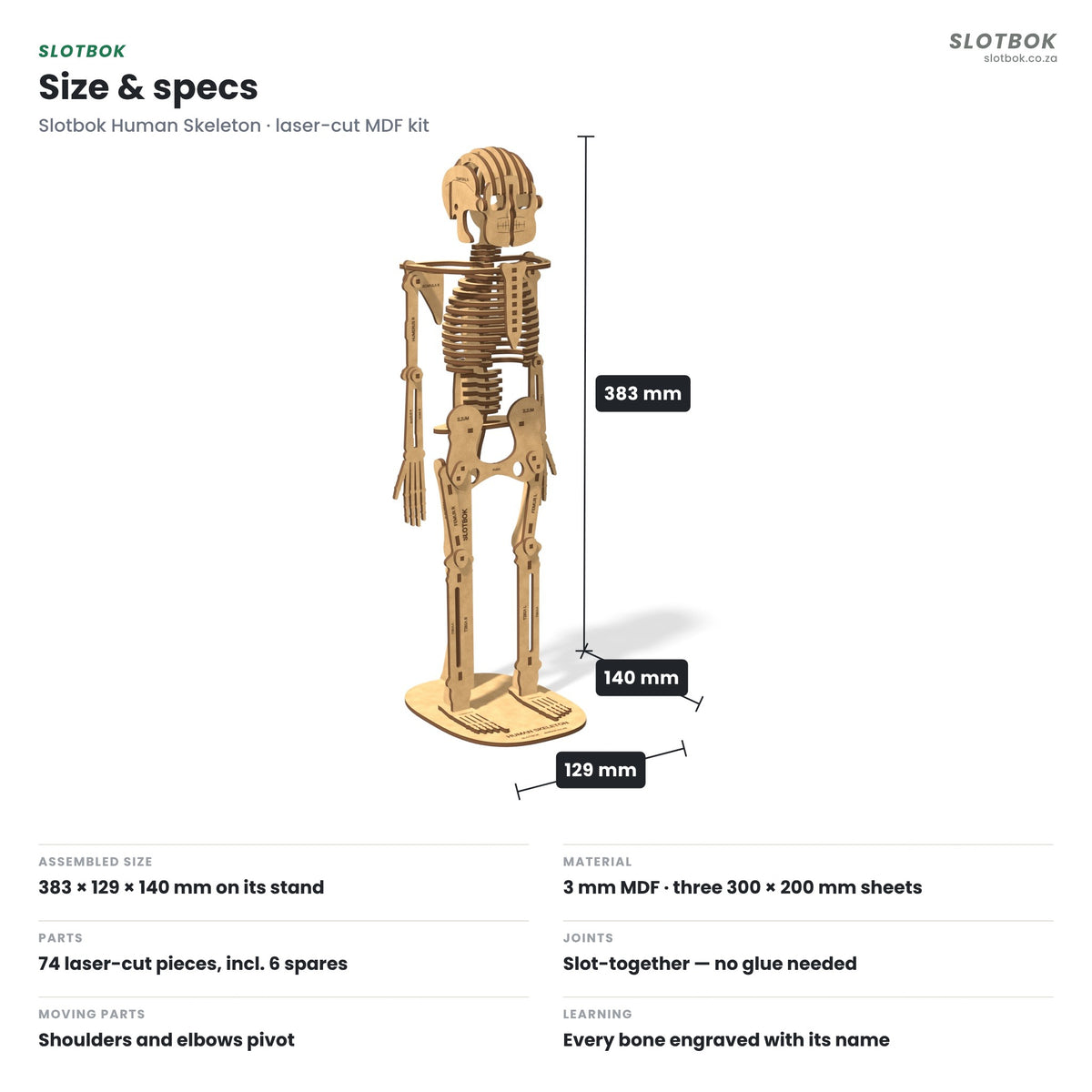
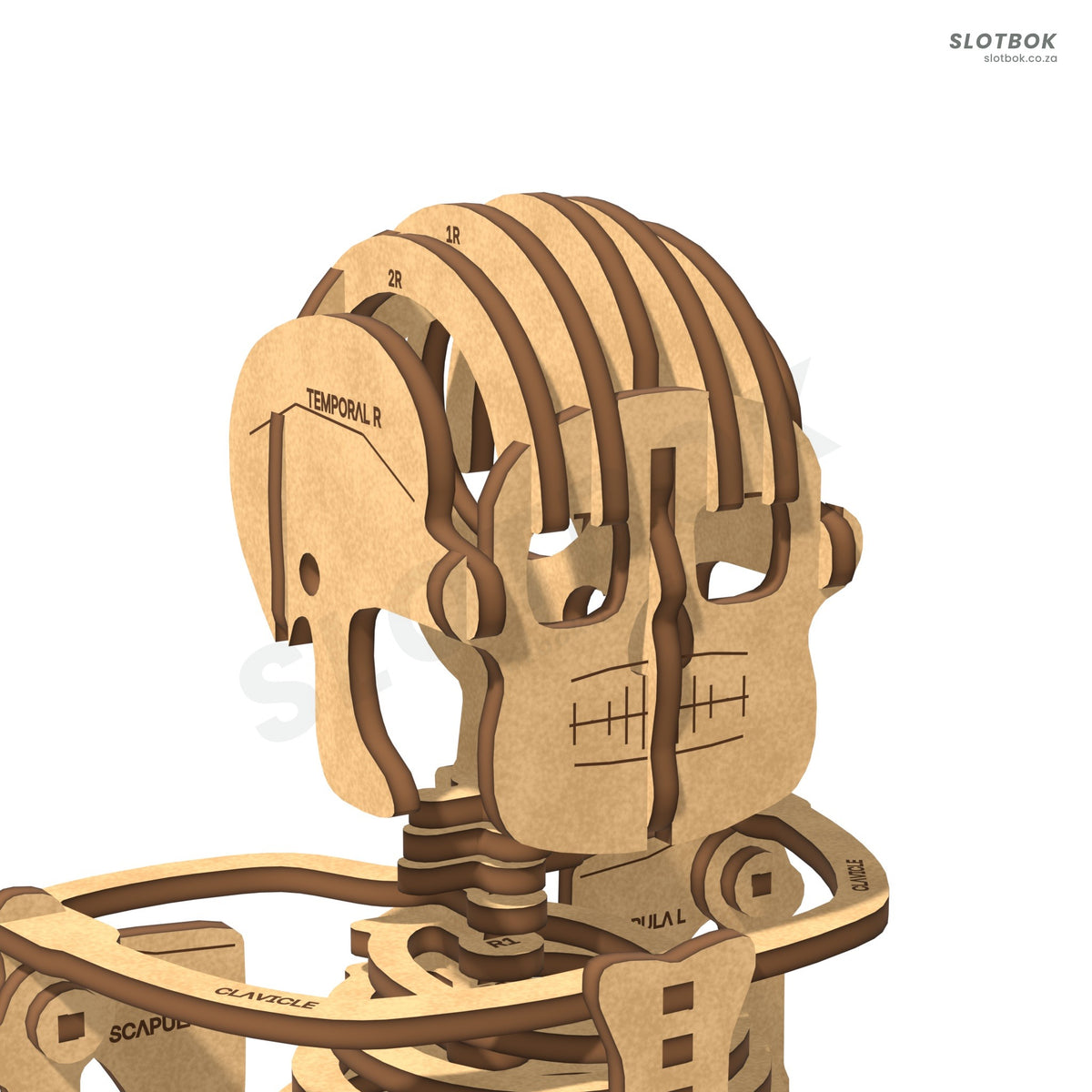
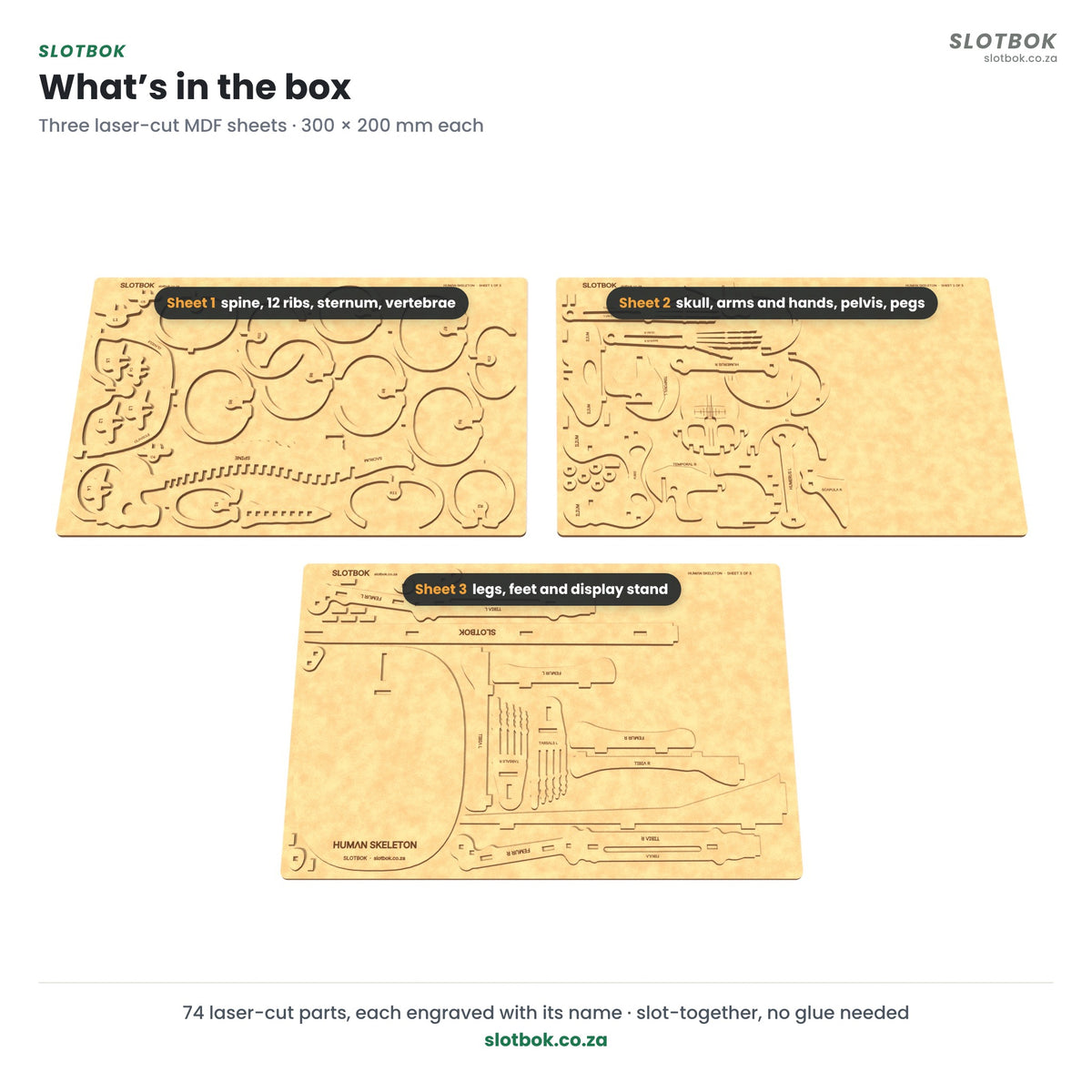
74 laser-cut parts, including 6 spares, on three 300 × 200 mm sheets of 3 mm MDF. Every part is engraved with its bone name, and everything slots together, with no glue.
Size when built
383 mm tall on its display stand, on a base 129 × 140 mm. The shoulders and elbows pivot, so the arms can be posed.
Materials
Every part is cut by laser from 3 mm MDF, so tabs and slots meet within a fraction of a millimetre, and each part is labelled.
Test-fitted before it's packed
We build every kit once by hand before it is packed. If a part doesn't fit, that's on us, not on your learner.
Common questions
How do you make a skeleton model for a school project? Start from the middle: the spine, with the skull on top, the rib cage around the chest and the pelvis at the bottom, then the arms and legs. With this kit the 3D build animation shows the order, and the parts slot together without any cutting.
Is it the whole skeleton project? It is the model. The labels, the drawings and the write-up are still the learner's own work.
Delivery
Packed in one flat box in Gauteng and shipped to homes, schools and shops across South Africa and Namibia. Standard delivery anywhere in South Africa is R65. Delivering to Namibia? WhatsApp us with your town for the cost. Buying for a class or a shop? Ask about class sets and wholesale.
- 01 Drawn
- 02 Cut
- 03 Test-fitted
- 04 Filmed
- 05 Packed
Other kitsProjects & puzzles
Build one this term.
Get a kit